How To Prevent Horrific Accidents
with Canary Cage Inspection.
Is your canary cage safe?
Canaries seem to have an amazing ability to get their legs and feet caught in things...and a problem with the cage or its furnishings is usually the culprit.
If you keep birds long enough, you may eventually end up with a story like the one below. This story is a good reminder to inspect your canary cage thoroughly before putting any birds in it.
For lots of info on keeping your canary safe check out Matthew M. Vriends, The Canary Handbook. Highly Recommended.


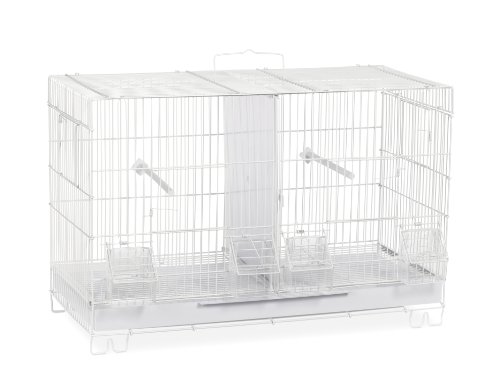
Here’s what happened...
One of my little flyers had a bit of an accident the other day.
After entering the aviary in the morning to provide the morning feeding, I noticed a very strange and unusual sight. There was a canary hanging upside down and fluttering its wings in valiant effort to release itself from some invisible foe.
On closer inspection I could see that the bird was a hen and had somehow gotten her foot caught in the wiring of the cage and was dangling helplessly with a broken leg.
It was not a pretty site...
It seems one of the wire loops that helps hold the mesh of the canary cage
wall together had not been bent down properly. There was a slight gap left open.
The leg was snapped in two and the skin had been pulled away from the upper bone.
Well, obviously I thought I had lost a bird...I thought it unlikely she would be able to recover. But being the optimist that I am, I decided to give her a chance.
I gently removed her from the flawed cage and removed the lower part of the leg by snipping through the skin. The problem now was that a large portion of her upper leg bone had the skin ripped away from it. Rather than leave her with a bare bone leg, I snapped a new break just at the point where the skin was intact and removed the skinless bone.
I am not telling you this to gross you out or to depress you...this story actually has a happy ending...


I put some antibiotic in her water
plus applied some antibiotic banana cream
(love that stuff) on the wound to help prevent infection. I also gave her a healthy dose of vitamins. Looking back now, I realize it would have been wise to wrap the leg in gauze to help keep it clean. I don’t know why it didn’t occur to me at the time. It didn’t seem to matter however. I watched closely to see if she would live through this ordeal. How’d she do?
She survived. Unbelievable!
Not only did she survive but 4 weeks later she is doing great. She’s fluttering between perches

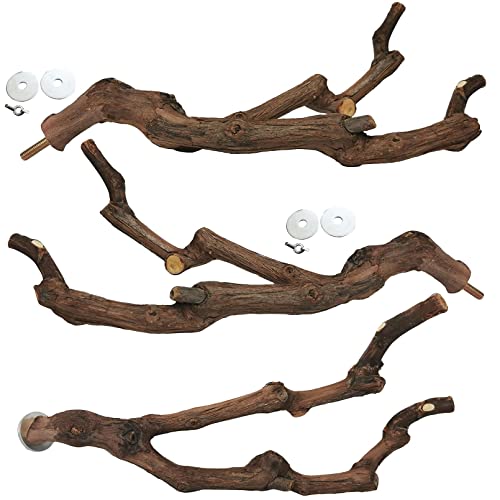

in the bird cage and hopping around on her one leg as if nothing ever happened. She has a healthy appetite and seems to be in perfect health.
Of course, now I have a one legged female canary who probably won’t be able to breed and no one is going to want to buy. That’s OK. Since she has the strength and tenacity to live through such an ordeal, I’ll be happy to keep her around.
I have a new found respect for the tenacity of these birds and their will to live.
The point of the story is that these little “sugar
birds” are a lot tougher than most people think...
AND it also serves as a reminder to have a close look at any potential
problems within your canary's cage.
*Look for anything in the bird cage that can catch a leg, toe, or claw.
*Loose canary cage wiring and nests that are made of a mesh material are well known hazards.
*Look closely at dishes, toys, and other canary cage furnishings for any small openings in the wire, plastic, or fabric.
This story first appeared in the FREE Canary Tips Ezine. Learn more and sign up here.
Return from Canary Cage Inspection to Canary Cage Main Page.